Volunteers from the UK support our work with children with disabilities
In early 2008, a group of teachers from Greenfields Special School in the UK, which caters to children and young people with multiple disabilities, contacted Mark O’Sullivan, founder of the Cedar Foundation. And so, in the spring of that year, together with representatives of the foundation, they visited the Institution for Children with Mental Disabilities in the village of Gorna Koznitsa, Bobov Dol municipality.
A year earlier, the Cedar team decided to work towards closing state-run institutions. The reason for this was their deep conviction that the institutions at that time were unable to provide quality care for the children in them and systematically violated their rights.
That is why the Cedar Foundation began preparations to create a new type of service and a smooth transition to a family or family-like living environment for all 58 children and young people with disabilities living in the home. The invitation to British volunteer teachers is intended to support this transition process.
The conditions in which the children live in the home and the lack of resources for their care shocked the volunteers, led by the deputy director of the special school and chief organizer of the initiative, Mary Crane.
Karen Dodds, one of the teachers in the group, noted, “Despite their limited knowledge and support, the staff at the state home were doing their best under the difficult circumstances.”
During this visit, the main goal of the teachers from the UK was to create “a gentle, quiet, calm environment and help the children and young people build relationships of mutual trust and understanding.”
Ms. Dodds kept very detailed and thoughtful notes of the goals and achievements during those days. “We tried to make basic assessments of all the children to help create individual plans for them for the future,” she says.


Part of Mrs. Dodds’ notes.
One of the volunteer teachers has experience as a physical therapist and has worked with children with more severe physical disabilities. Others take the older children out for walks. The volunteers still remember how the youngest children at the home performed a play for them called “The Gigantic Turnip”.
The following year, the volunteer teachers returned. Some of them provided training for future employees of the Cedar Foundation and the staff at the home, while others, including Ms. Dodds, spent time with the children. “We didn’t need language to have fun,” she recalls with a smile.
When a group of six other teachers arrived in Kyustendil for the fourth time in 2010, the residential home in the village of Gorna Koznitsa had already been closed, making it the first residential institution for children with disabilities in Bulgaria to be shut down.


Footage from the departure from Gorna Koznitsa and the drive to the new home.
This is the year when the process of deinstitutionalization began in our country. In partnership with the Municipality of Kyustendil, our foundation established and took over the management of the “Siyanie” family-type centers.
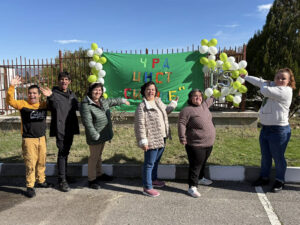
During this visit, volunteer teachers worked only with young people who had recently moved into the foundation’s family homes and apartments in Kyustendil.
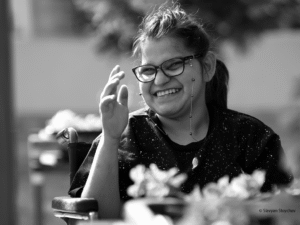
“The young people in the apartments were very proud of their new homes and showed us around,” recalls Ms. Dodds. “They responded very well to the activities we had planned and enjoyed preparing their own meals, learning about the different sensory tools, and working with the visual schedule for the day’s tasks.”


Footage from the first days in our family homes in Kyustendil.
During their last visit in 2011, the volunteers focused on observing the relationships between social therapists and young people in our family homes and suggested improvements.
Seventeen years later, Ms. Dodds continues to follow the work of the Cedar Foundation and the lives of the young people in our family homes through social media and rejoices in their development. After talking with her colleagues who visited Bulgaria with her, she shares, “From the photos on social media, we can see that the lives of the young people who lived in the home in Gorna Koznitsa years ago are drastically better. We are proud to have been, albeit a small part of this improvement. We recognize many of the children, now young adults, and are happy to see them. We wish them all the best.”
Looking back, our Executive Director Adriana Gotzova shares, “In 2008, there were not many specialists in Bulgaria who worked with children with disabilities in a truly in-depth and humane way. That is why the contribution of the volunteers from the UK is particularly important for our organization, for which we are very grateful.”
Why Bulgaria?
The teachers’ visit was inspired by the film “Bulgaria’s Abandoned Children,” broadcast by the BBC in 2007. Shocked by what they saw and motivated by their desire to help with their knowledge and experience, the teachers organized a campaign to raise funds among the parents of their students and the local community, which financed their volunteer work in Bulgaria from the fall of 2007 to 2011.
Initially, they visited the Home for Children with Mental and Physical Disabilities in the village of Mogilino, but were not allowed to work directly with the children. Therefore, on their subsequent visits to Bulgaria, they decided to work with the Cedar Foundation and the municipality of Kyustendil, assisting with the work with children and young people from the home in the village of Gorna Koznitsa and their smooth transition to life in our family-type homes.
According to official data, in 2007, during the first visit of the volunteer teachers from the UK, there were 8,000 children in specialized institutions in Bulgaria. To date, 79 children have been placed in specialised institutions.